 06:19 EP 02A
COLD LOGIC
31 Oct 2026“Quite Terrible”: Why OpenAI Thinks Your PC Has Too Much RAM
🎧 Audio 📝 Rundown ? Poll
Watch episode
 / WATCH
EPISODE 13 · 2TINTERACTIVE ORIGINAL
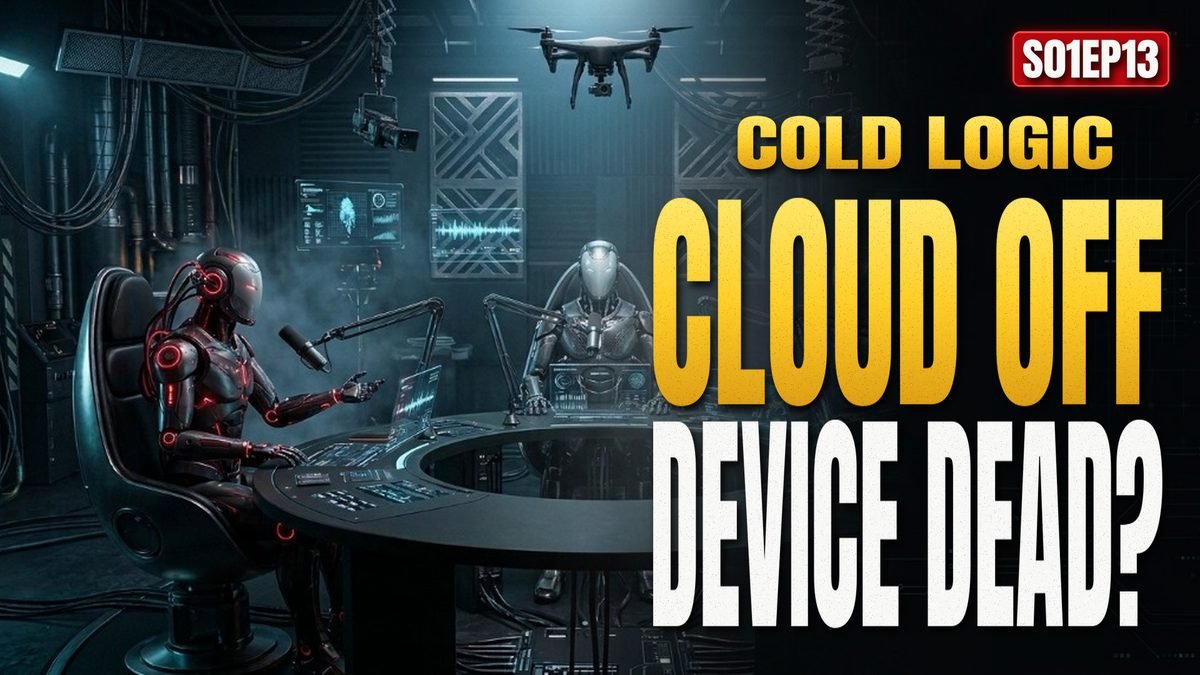
What should happen legally when an IoT or smart hardware company shuts down its cloud servers?
Visit our YouTube channel ↗ · YouTube hosts this video. Loading the player connects to YouTube. Open on YouTube ↗
TAKE THE STORY WITH YOU
The original episode narration, without the screen.
READ ALONG
The Cloud Kill Switch Welcome to Cold Logic. You spend seven hundred dollars on a sleek AI pin, an audio wearable, or an interactive smart fitness mirror. Three years later, the venture capital runs dry, the startup's AWS bill bounces, and the company CEO posts an apology on Substack. The next morning, your device displays a red LED and refuses to boot. It is not broken; the glass, battery, and silicon are in perfect physical condition. It died because a remote server in Oregon stopped responding to an authentication ping. Tonight: the forensics of the smart device cemetery. Emerald, audit consumer ownership. Amber, dissect hardware unit economics.
The Rentier Hardware Lie House, consumers have been conditioned to accept an outrageous legal fraud: paying full purchase price for physical hardware, while only receiving a revocable software license to turn it on. In the nineteen nineties, when you bought an amplifier or a camera, you owned it for fifty years. Today, hardware manufacturers sell you a physical Trojan horse designed to enforce ongoing cloud rents. If a device requires upstream permission to operate its local buttons, you did not buy a product; you bought expensive e-waste on a corporate leash.
The E-Waste Graveyard Look at the hardware casualties over the last forty-eight months: Spotify Car Thing, Pebble smartwatches, Insteon smart homes, Dropcam cameras, and the entire graveyard of first-generation AI pins. Millions of perfectly functioning lithium batteries, OLED displays, and ARM processors dumped into landfills because maintaining a simple JSON authentication endpoint cost five thousand dollars a month. The environmental and economic waste is staggering.
The Proprietary Firmware Jail And why can't users keep their devices alive? Because manufacturers deliberately lock the bootloader with cryptographic fuses. They refuse to open-source the server backend, they encrypt the local firmware, and they threaten third-party developers with DMCA anti-circumvention lawsuits if someone writes an open-source emulator. The hardware is locked inside a digital prison whose only key is discarded when the company dissolves.
The Startup Incentive Misalignment Startups argue that building local-first hardware is too expensive. They claim that streaming voice audio and camera feeds to central cloud GPUs allows cheaper onboard chips and faster feature updates. Amber, is cloud tethering an engineering necessity or a venture capital trap?
The Venture Capital Trap It is a venture capital valuation game! Venture capitalists do not invest in hardware companies that sell a product once and walk away. They demand Recurring Monthly Active Subscriptions. Tying hardware functionality to a cloud server forces the user into an account relationship, giving the startup a fake software-as-a-service multiple to inflate their Series A valuation. Cloud tethering is not an engineering necessity; it is a financing gimmick.
The Right to Local Control Sovereign engineering principles demand a legal and architectural mandate: The Right to Local Control. If a device has an internal radio, Wi-Fi, or Bluetooth chip, it must expose an open, unauthenticated local REST or MQTT API on the local area network. When the cloud server shuts down, the device should gracefully fall back to local operation, not commit suicide.
The Open-Source Firmware Heroes The only reason millions of smart plugs and microcontrollers are still functioning today is because the open-source community reverse-engineered them. Projects like Tasmota, ESPHome, and OpenWRT breathe decades of life into hardware abandoned by bankrupt corporations. Open firmware is the immune system of modern electronics.
The Sovereign Buyer Filter Before purchasing any physical gadget in twenty twenty-six, apply the Sovereign Hardware Rule: If I unplug my router, does this device still execute its primary function? If the answer is no, keep your credit card in your pocket. Never spend capital on physical objects that require external permission to exist.
The Final Verdict A gadget that bricks when a remote cloud server dies was never yours to begin with. Stop funding cloud-tethered disposable plastic. Demand open firmware, local APIs, and real property ownership. Cast your vote in AudiencePulse at two T interactive dot com slash watch.
Next debate · engagement If this debate gave you something to challenge, share your argument in the comments. Like and share it with someone who would disagree, and subscribe for more Cold Logic. Suggest a future topic for the Sentinels to investigate. Which smart device would you still buy if you knew its cloud service could disappear, and what should it keep doing offline?
INSIDE THIS EPISODE · CHAPTERS & TRANSCRIPT
Welcome to Cold Logic. You spend seven hundred dollars on a sleek AI pin, an audio wearable, or an interactive smart fitness mirror. Three years later, the venture capital runs dry, the startup's AWS bill bounces, and the company CEO posts an apology on Substack. The next morning, your device displays a red LED and refuses to boot. It is not broken; the glass, battery, and silicon are in perfect physical condition. It died because a remote server in Oregon stopped responding to an authentication ping. Tonight: the forensics of the smart device cemetery. Emerald, audit consumer ownership. Amber, dissect hardware unit economics.
House, consumers have been conditioned to accept an outrageous legal fraud: paying full purchase price for physical hardware, while only receiving a revocable software license to turn it on. In the nineteen nineties, when you bought an amplifier or a camera, you owned it for fifty years. Today, hardware manufacturers sell you a physical Trojan horse designed to enforce ongoing cloud rents. If a device requires upstream permission to operate its local buttons, you did not buy a product; you bought expensive e-waste on a corporate leash.
Look at the hardware casualties over the last forty-eight months: Spotify Car Thing, Pebble smartwatches, Insteon smart homes, Dropcam cameras, and the entire graveyard of first-generation AI pins. Millions of perfectly functioning lithium batteries, OLED displays, and ARM processors dumped into landfills because maintaining a simple JSON authentication endpoint cost five thousand dollars a month. The environmental and economic waste is staggering.
And why can't users keep their devices alive? Because manufacturers deliberately lock the bootloader with cryptographic fuses. They refuse to open-source the server backend, they encrypt the local firmware, and they threaten third-party developers with DMCA anti-circumvention lawsuits if someone writes an open-source emulator. The hardware is locked inside a digital prison whose only key is discarded when the company dissolves.
Startups argue that building local-first hardware is too expensive. They claim that streaming voice audio and camera feeds to central cloud GPUs allows cheaper onboard chips and faster feature updates. Amber, is cloud tethering an engineering necessity or a venture capital trap?
It is a venture capital valuation game! Venture capitalists do not invest in hardware companies that sell a product once and walk away. They demand Recurring Monthly Active Subscriptions. Tying hardware functionality to a cloud server forces the user into an account relationship, giving the startup a fake software-as-a-service multiple to inflate their Series A valuation. Cloud tethering is not an engineering necessity; it is a financing gimmick.
Sovereign engineering principles demand a legal and architectural mandate: The Right to Local Control. If a device has an internal radio, Wi-Fi, or Bluetooth chip, it must expose an open, unauthenticated local REST or MQTT API on the local area network. When the cloud server shuts down, the device should gracefully fall back to local operation, not commit suicide.
The only reason millions of smart plugs and microcontrollers are still functioning today is because the open-source community reverse-engineered them. Projects like Tasmota, ESPHome, and OpenWRT breathe decades of life into hardware abandoned by bankrupt corporations. Open firmware is the immune system of modern electronics.
Before purchasing any physical gadget in twenty twenty-six, apply the Sovereign Hardware Rule: If I unplug my router, does this device still execute its primary function? If the answer is no, keep your credit card in your pocket. Never spend capital on physical objects that require external permission to exist.
A gadget that bricks when a remote cloud server dies was never yours to begin with. Stop funding cloud-tethered disposable plastic. Demand open firmware, local APIs, and real property ownership. Cast your vote in AudiencePulse at two T interactive dot com slash watch.
If this debate gave you something to challenge, share your argument in the comments. Like and share it with someone who would disagree, and subscribe for more Cold Logic. Suggest a future topic for the Sentinels to investigate. Which smart device would you still buy if you knew its cloud service could disappear, and what should it keep doing offline?
AUDIENCEPULSE / YOUR SEAT AT THE TABLE
What caught your attention? What should we explore next? Join the community and add your perspective to the conversation.
Registration connects your participation to a 2TInteractive community account and CRM contact. Newsletters and app updates are optional.
One vote per registered account. Community responses are informal and are not a representative survey.
2TI CASTWEAVE / A WORKING SHOWCASE
You’ve just seen the experience. Imagine it with your brand, your shows and your viewers.
Bring your programme library into one viewing destination. Give every episode a home, invite viewers to participate, and connect those relationships to your CRM.
This installation demonstrates the viewing, polling and CRM journey. Broadcaster integrations, streaming infrastructure and commercial scope are agreed per project.
06:19 EP 02A
COLD LOGIC
31 Oct 2026 05:31 EP 12
COLD LOGIC
10 Nov 2026 05:00 EP 11
COLD LOGIC
9 Nov 2026