[H1] Humanizing the Workplace with AI Co-Workers: The Future of Collaboration
The integration of Artificial Intelligence (AI) into the workplace is inevitable, but its ultimate impact hinges on our approach. While AI excels at boosting productivity and efficiency, the crucial challenge—and opportunity—lies in leveraging this technology to humanize the work environment. By strategically implementing AI as a co-worker, we can foster a more collaborative, creative, and fulfilling workplace for human employees, moving beyond fears of replacement to a model of powerful augmentation.
[H2] The Rise of AI Co-Workers: Beyond Automation
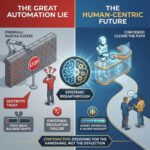
AI is fundamentally reshaping the workplace, from intelligent chatbots to advanced data analytics. However, as these tools become ubiquitous, we must proactively design their role. The goal isn’t a fully automated office but a blended workforce where AI handles repetitive, data-intensive tasks. This shift allows human workers to dedicate their unique skills to areas where they excel: complex problem-solving, emotional intelligence, creative innovation, and strategic relationship-building. The rise of the AI co-worker marks a transition from tools to teammates.
- Augment Human Capabilities: AI can enhance human productivity, accuracy, and decision-making, freeing up humans to focus on higher-level tasks.
- Replace Human Jobs: AI can automate routine and repetitive tasks, potentially displacing human workers.
- Change Workflows: AI can alter workflows, requiring humans to adapt and learn new skills.
[H2] How AI Co-Workers Actually Humanize the Workplace
To cultivate a harmonious and effective human-AI partnership, organizations should focus on several key strategies. First, clearly define roles: assign procedural and analytical tasks to AI, freeing humans for interpretive and interpersonal work. Second, foster transparent communication about how AI tools function and their purpose within teams. Third, provide comprehensive training for employees to collaborate confidently with their AI counterparts. Finally, design AI interfaces and workflows that feel intuitive and supportive, not intrusive. This thoughtful integration is the core of humanizing technology.
- Define Clear Roles: Clearly define the roles and responsibilities of both humans and AI to avoid confusion and overlapping tasks.
- Foster Open Communication: Encourage open communication between humans and AI to ensure seamless collaboration and address any issues that arise.
- Provide Training and Development: Offer training and development opportunities to help humans adapt to AI-assisted workflows and new skills.
- Monitor and Evaluate: Continuously monitor and evaluate the impact of AI on human workers, making adjustments as needed to ensure a positive and productive work environment.
[H2] 5 Key Benefits of Humanizing Work with AI
- Improved Productivity: AI can enhance human productivity, allowing humans to focus on higher-level tasks and decision-making.
- Enhanced Creativity: AI can stimulate human creativity, encouraging innovative thinking and problem-solving.
- Better Decision-Making: AI can provide data-driven insights, supporting informed decision-making and reducing the risk of human bias.
- Increased Job Satisfaction: By augmenting human capabilities, AI can lead to increased job satisfaction and reduced stress.
[H2] Conclusion: Building a Synergistic Human-AI Culture
Prioritizing a human-centered approach to AI integration delivers significant organizational advantages. Key benefits include enhanced employee well-being by automating mundane tasks and reducing burnout, a sharp increase in innovation as human creativity is unleashed, improved decision-making through AI-powered data insights, stronger team collaboration, and a significant boost in overall job satisfaction and employee retention. Humanizing the workplace with AI co-workers isn’t just ethical; it’s a strategic advantage that builds a more resilient and adaptive organization.